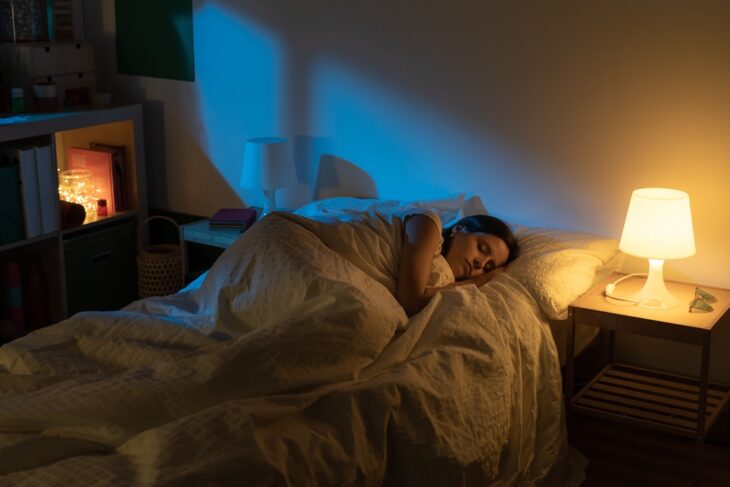
Shutterstock
Nighttime light exposure significantly increases heart disease risk, according to groundbreaking research involving nearly 89,000 participants. The extensive study analyzed 13 million hours of personal light exposure data, revealing its disruptive effect on the body’s internal clock — making it a major risk factor for five serious cardiovascular conditions.
Your body’s circadian rhythms act as its internal timekeeper, regulating crucial functions throughout the 24-hour cycle. When these rhythms get thrown off balance, everything from hormone production to digestion and body temperature can be affected.
Scientists at the Flinders Health and Medical Research Institute have discovered that exposure to light during nighttime hours disrupts these natural rhythms, substantially raising the risk of developing coronary artery disease, heart attacks, heart failure, stroke, and irregular heartbeats.
This research could change how we think about heart disease prevention.
The team’s findings, published on the medical pre-print server medRxiv, utilized data from wrist-worn light sensors that captured both natural and artificial light in participants’ environments — including the glow from smartphones. They found “higher risk of mortality by cardiometabolic causes” in individuals regularly exposed to nighttime light.
Perhaps most concerning is that artificial light continues affecting the body even after it’s turned off. Even brief nighttime exposure can disrupt circadian rhythms, potentially increasing the risk of type 2 diabetes (a leading contributor to heart disease).
“This is the first study of personal light exposure patterns and incident cardiovascular diseases, establishing night light as an important new risk factor,” wrote the researchers. “Our findings demonstrate that, in addition to current recommendations, avoiding night light may be a promising approach for preventing cardiovascular diseases.”
Study co-author Daniel Windred from Flinders University advised in an interview with New Scientist, “Choose an interval of time when you’re usually asleep and protect the darkness of this interval each night. If you get up during the night, use dim, warm lighting, and avoid turning on bright overhead lights.”
How Light Affects Heart Health
The research team used wearable technology to monitor participants’ exposure to both natural and artificial light sources. This included everything from street lamps to television screens and bedroom night lights — providing unprecedented insight into real-world exposure patterns.
The connection between light exposure and cardiovascular health appears to work through several mechanisms. Nighttime light suppresses melatonin production (the sleep hormone), raises stress hormones like cortisol, and may trigger inflammatory responses throughout the body.
These disruptions don’t just affect sleep quality — they create cascading effects on blood pressure regulation, glucose metabolism, and vascular function. Over time, these physiological changes can contribute to the development of serious heart conditions.
Our findings demonstrate that, in addition to current recommendations, avoiding night light may be a promising approach for preventing cardiovascular diseases.
The study’s implications extend beyond individual health concerns to broader public health and urban planning considerations. As cities worldwide increase nighttime illumination, the potential population-level impacts on cardiovascular health could be significant.
Experts suggest several practical steps to minimize nighttime light exposure:
- Use blackout curtains or eye masks during sleep
- Avoid screen time at least an hour before bed
- Install dimmer switches and use warm-toned lighting at night
- Consider using motion-activated nightlights rather than constant illumination
The research team plans follow-up studies to determine if targeted light interventions might reduce cardiovascular risk in high-risk populations.

